
We’ve been working in non-profit marketing for over a decade and we’ve noticed that a lot of nonprofit marketing campaigns follow a similar script: a launch post goes up, a few reminder posts trickle out, and then a thank-you post wraps it all up. While that may have worked 10 years ago, it’s not as effective in today’s social media landscape.
Social media strategy circa 2016
If you were running campaigns around 2016, you probably used some version of this framework:
Launch: announce the campaign
Sustain: the middle push to keep momentum going
Wrap: the finale and the thank-you
This model assumes your audience experiences the campaign in order, from beginning to end, which made sense when social feeds were chronological and your followers ACTUALLY saw your posts. Now (as we know), algorithms serve posts out of order, sometimes days or weeks later, and often to people who don’t follow you at all.
It’s a totally different landscape on social media, and a chronological campaign that assumes people have seen your previous posts doesn’t make sense.
The new way: build more on-ramps
This reframing comes from Matthew Stasoff’s article ‘Your campaign needs more on-ramps’ (via LinkInBio.news), and it’s one of the most useful shifts in campaign thinking we’ve come across.
An ‘on-ramp’ is a piece of content that brings people in no matter when they find it. It works whether it’s someone’s first exposure to your campaign or their fifteenth.
More about “on-ramps”:
On-ramps consider multiple characters, which means more doors for more kinds of people. The retired teacher, the Gen Z university student, and the millennial small business owner might each connect with a different angle, format or person in your campaign.
An on-ramp works as a standalone first impression, whether someone finds it mid-campaign or completely out of order.
Instead of asking, “What’s the beginning, middle, and end of this campaign?” ask, “How many different doors can someone walk through to end up caring about this?”
You can still have a launch day and a big finale; but every piece of content in between should be able to stand on its own.
Planning an effective non-profit advocacy campaign
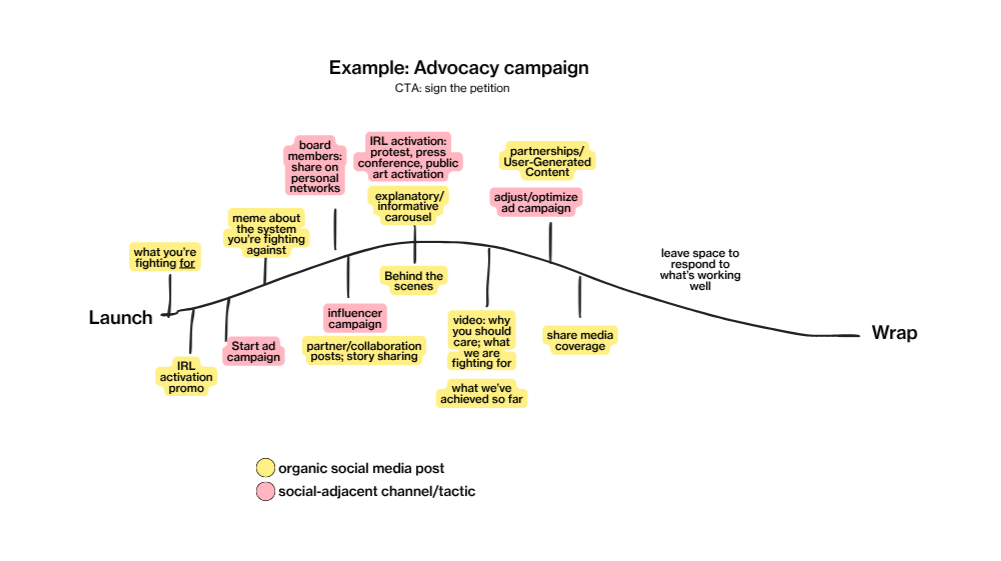
Here’s how we’d apply the on-ramp framework for your non-profit to an advocacy style campaign (see the graphic below). The graphic includes a mix of organic social media posts, combined with off-social media tactics to build a campaign that wins people over and draws them into your cause. You might begin with a carousel post about what you’re fighting for, weave in a meme about the government or system, show a behind-the-scenes video, and then share media coverage about your campaign.
The main thing you want to remember: incorporate a mix of styles and formats for your content throughout the campaign. These different styles will appeal to different types of people and open up those on-ramps to caring about your cause.
We recommend leaving space towards the end to double down on content that’s been working really well during the early stages of the campaign.
If your advocacy campaign has an IRL component like a protest or a press conference, remember to make that a moment in itself on social media. People need to see something an average of 7 times before they actually take action. You might sound repetitive to yourself, but we promise sharing the same ideas multiple times will NOT be repetitive for your audience.
Engaging your board members is often a slept on tactic to reach more people during your campaign. Give your board members some prompts to share their own personal story about why the organization and the advocacy campaign is important to them in their lives. Ask them to share their story through their personal social media channels. That will help you reach new people and get them engaged through someone they trust.
Planning an effective non-profit program recruitment campaign
Last year we developed a campaign for Rainbow Registered, a certification program for Canadian businesses and organizations to indicate that they’re 2SLGBTQIA+ friendly. One of the key goals of the campaign was to get more businesses signed up for the Rainbow Registered program.
We used the on-ramps framework to design a campaign that brought in 31 new program applications in 3 months.
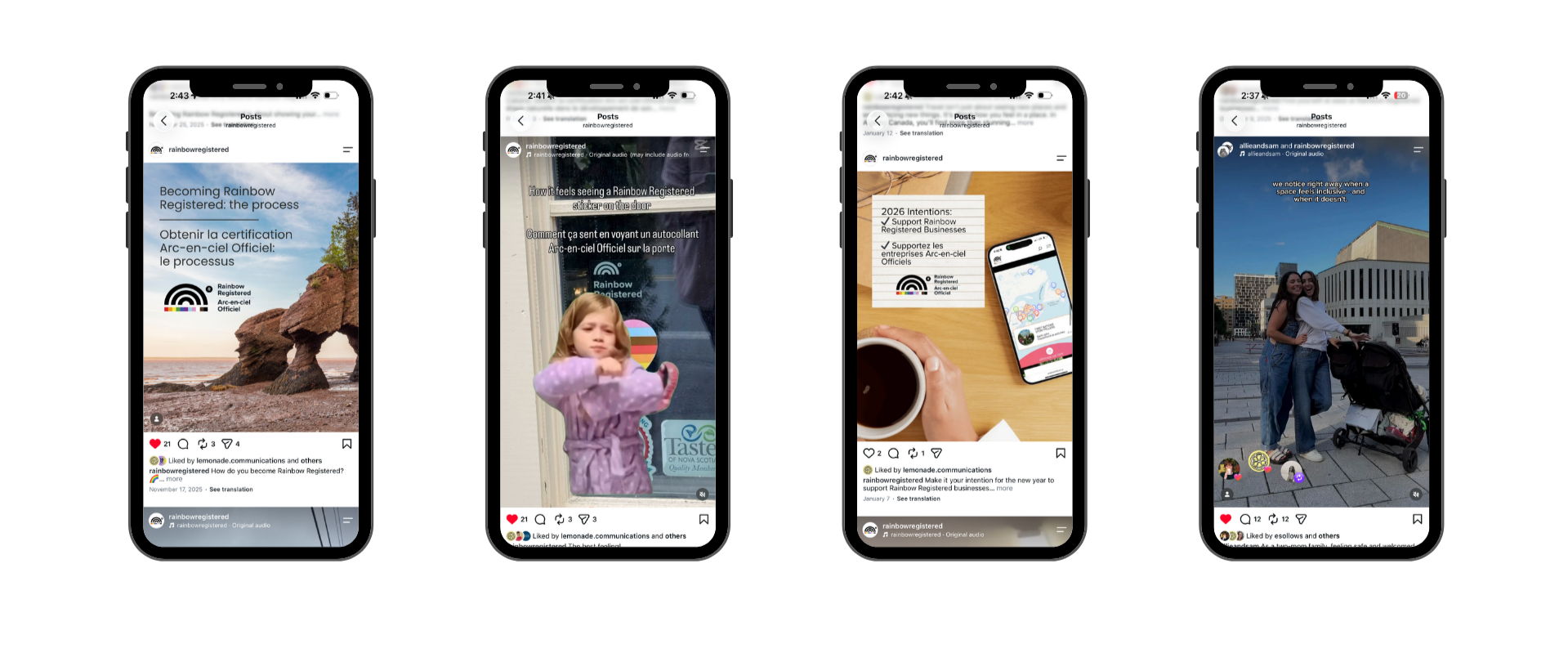
The social media posts in the image below show how we used a mix of content styles to appeal to different types of business owners.
Breakdown of the social media posts:
(in order from left to right)
Single graphic with details about how to become Rainbow Registered. This appealed to people who wanted to know more about how the program worked.
Reel using a CapCut template of a little girl dancing and having fun. The text says “How it feels when you see the Rainbow Registered sticker on the door”. This appealed to business owners who were more chronically online because it was trending at the time, and people who like sillier more informal content.
A graphic that uses language about setting your intentions to become Rainbow Registered in the new year. This worked because we shared it around New Years eve and it was timely for the season we were in.
Reel posted by Allie and Sam, a sapphic influencer couple based in Canada. This was VERY effective because it allowed us to tap into a much larger audience through Allie and Sam. Because they are part of the 2SLGBTQIA+ community, they have a lot of credibility on queer topics and issues with their followers.
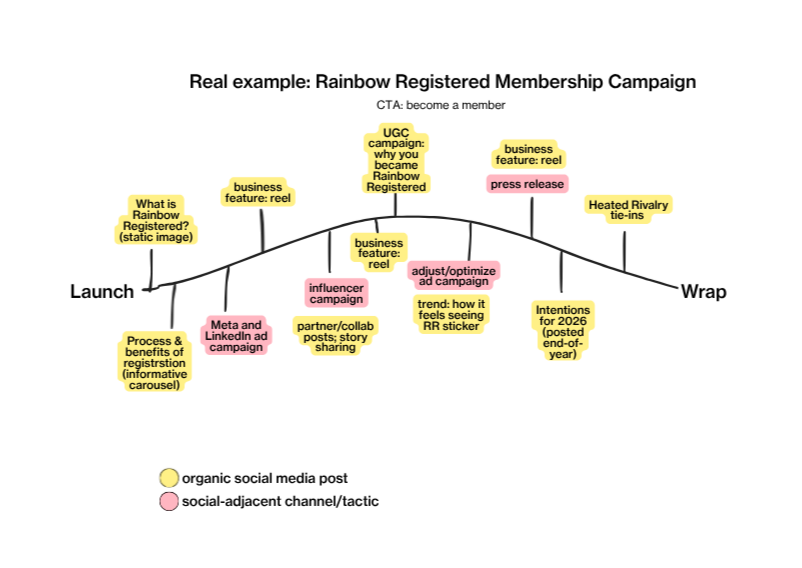
Another social media tactic we used that isn’t pictured above, was interviews and storytelling with existing Rainbow Registered businesses about why it was important to them to be part of the program.
The Rainbow Registered social media campaign worked because we offered so many on-ramps for people to start caring about it. The graphic below shows the different social media and off social media tactics we used throughout the campaign.
The bottom line
A great campaign starts with a clear strategy, puts people at the center, and gives your audience multiple access points.
Social media campaigns used to have a distinct beginning, middle, and end where you could assume that someone was seeing your content in the order you posted it. Because the algorithms have changed so much over the last ten years, that’s no longer the case. Remember that each piece of content should be able to stand on it’s own without someone seeing the rest of your campaign. Even your final post should have an invitation for how someone can get involved and stay engaged, because that could be the first time they’re hearing about your campaign.
Whether it’s a previous donor or someone who’s never heard of you before, give them a warm, welcoming door to walk through at every stage of your social media campaign.
