
Yes, it’s worth making your marketing more accessible
Did you know that 1 in 6 people worldwide have what the World Health Organization calls a “significant disability”?
That’s a lot of people.
There are many small missteps we can take when it comes to the accessibility of our online content. Oftentimes when it comes to disability you don’t know what you don’t know. Meaning, if you’ve never experienced a certain disability and you don’t know anyone who has that disability, it might not occur to you what that experience would be like.
Do you know that feeling when you hear a first-hand story from someone who’s experienced oppression in a way you never have (and often never could)? You get a glimpse into someone else’s lived experience and it’s such a gift, because now you know how to better support someone, or you know what NOT to do.
As much as we try to put ourselves in other people’s shoes, sometimes we just can’t imagine what another person’s experience is when we haven’t experienced it ourselves.
How I learned about accessibility
When I was working in the active transportation advocacy space I was so grateful to advocates like Jillian Banfield and Milena Khazanavicious who were vocal about their needs as disabled folks who walk and cycle to get around our city.
Jillian taught me tons of things, but one that stands out is using camel case for hashtags online. We were deep in the Twitter era at the time (RIP) and hashtags were widely used. Camel case is where you capitalize the first letter of each word in a hashtag, which makes it more readable and understandable.
For example, use #FreePalestine instead of #freepalestine
See how much easier it is to read in camel case?
Both Jillian and Milena (and others) taught me that people with disabilities cycle. People who are blind cycle (typically on a tandem bike with a pilot in the front), and people who cannot walk may be able to cycle. Not only do people with disabilities cycle, in some cases their bike is their mobility aid and the thing that helps them access the places they need to go every day.
Learning from these folks and others enabled me to integrate their needs into our work.
When my career focus shifted to communications and marketing, I was constantly trying to take in information about making communications materials more accessible for people with disabilities. While I am always learning more and trying to do better, I’ve learned a lot about accessibility over the years.
Exclusion in our digital spaces isn’t usually intentional, but it adds up to creating an online presence that’s unwelcoming and inaccessible. If your community can’t take in the information you’re sharing because you haven’t built in basic accessibility (ie: captions on videos, appropriate color contrast for text and backgrounds, and alt text), then you’re loosing out on connections and opportunities.
So, I’m here to tell you everything you need to know about accessibility and why it’s important for your marketing.
What is digital accessibility?
Accessibility refers to the deliberate design of the built environment, products, services, communications, and systems in a way that everyone (including people with disabilities) can fully participate in. Digital accessibility is accessibility in our online world.
When we design online communications and marketing materials using an accessibility lens, we ensure that people with disabilities can gain access to the same information that someone without that disability can.
Who is accessibility it for?
1 in 6 people worldwide have a disability. In Canada that rate is even higher at 1 in 4 and in Nova Scotia it’s higher still at 1 in 2.6 people.
Ensuring our communications materials are accessible benefits folks with disabilities, but when we make things more accessible, it also benefits everyone.
As an example: when we improve color contrast on a social media graphic it helps people with low vision to take in the information, but it also helps someone with 20/20 vision because it’s simply easier to read.
Why do you need to be more accessible?
The most obvious reason to me is because you care about others and want to ensure they are included in what you do. If that isn’t reason enough, by excluding a portion of the population from your marketing and your services, you’re loosing out on sales or donations. If you’re not doing it for altruistic reasons, there is a solid business case for being more accessible and allowing more people into your organization or business.
When it comes to your website, making it accessible also helps your SEO ranking and allows your website to perform better in search queries. Google and other search engines prioritize websites what follow Website Content Accessibility Guidelines (WACG).
What does accessibility do for you?
Incorporating accessibility into your communications allows everyone to take in the information you’re sharing, increases engagement with your organization or business, and helps more people find you.
Committing to accessibility in your digital and physical spaces helps to create more inclusive communities where everyone can feel like they belong. And that just feels good.
How can you incorporate accessibility best practices?
You can download our free accessibility checklist to get started with simple practices that can make your social media, newsletter, and documents more accessible right away. Our checklist is designed for folks who are new to online accessibility considerations and want a quick checklist you can reference while you’re creating content.
Consider accessibility when selecting online platforms for your organization. For example, Rache at Squarestylist conducted a test of five different website builders and Squarespace was near the top of the list for accessibility, which is one of the reasons we love using it for our client website projects.
Book a strategy call with us to talk through how to implement accessibility in your specific marketing platforms and workflows.
After using our accessibility checklist you’ll be confident that you’re communicating with clarity and care with folks who have disabilities... and everyone else. Because when we make something more accessible for folks with disabilities, we typically make it more accessible for everyone.
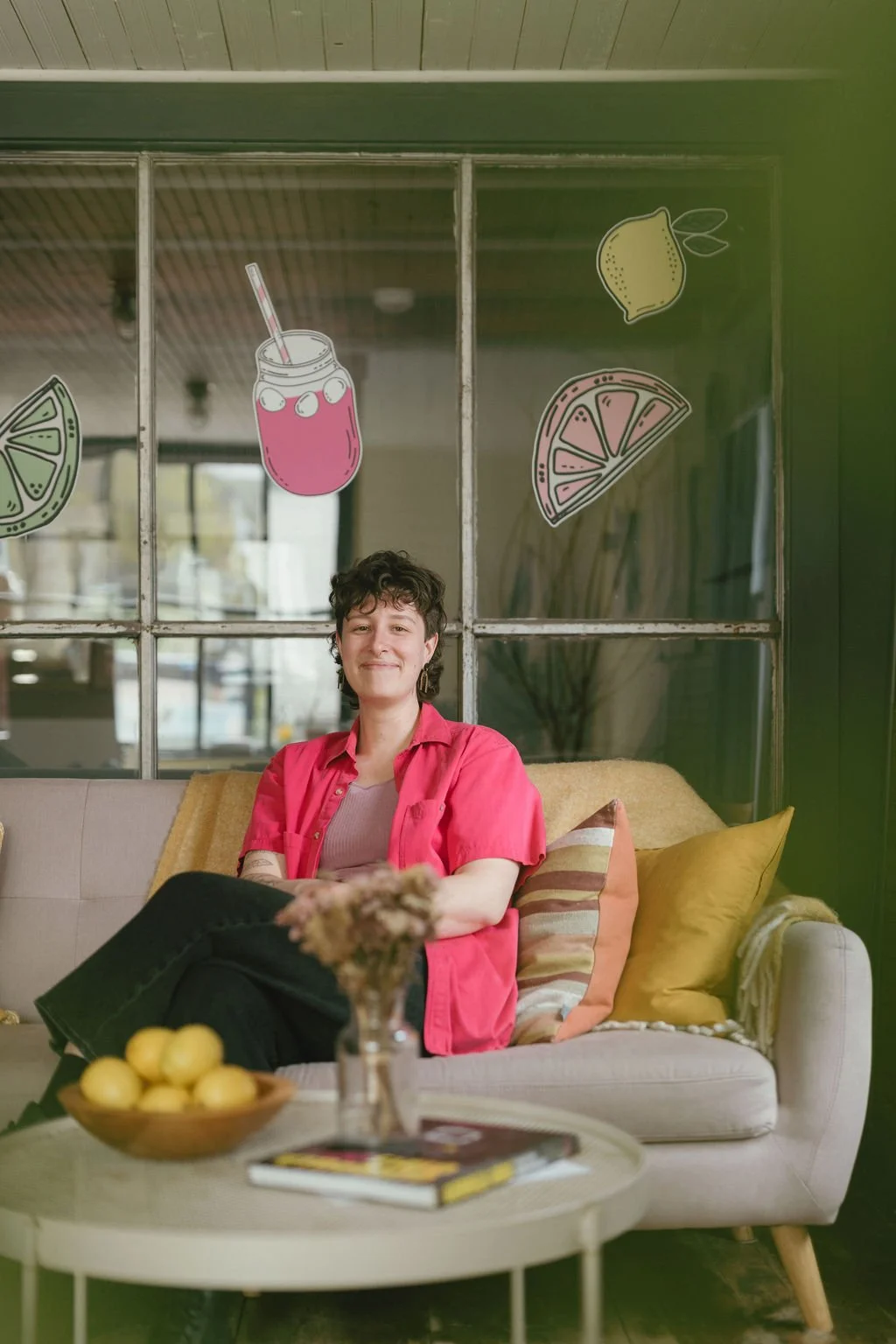
I’ve been working with non-profits for 10+ years because I don’t really give a f*ck about big corporations but I do give a f*ck about helping you make a bigger impact for people and the planet.
If you like my blog and want to stay in touch, here’s how:
Subscribe to my newsletter, where I help you communicate your impact with clarity, accessibility, and care at the heart of it 🩷
Join the Social Impact Comms Club, an online community for values-led comms folks to connect and share feedback with each other. In this house we believe in collaboration over competition.
Check out my brand services. I create brand strategies and visual identities for non-profits, social impact orgs, and values-led businesses.
Check out my website design services. I create beautiful and functional Squarespace websites for non-profits, social impact orgs, and values-led businesses.
Check out The Lemonade Stand, my online shop where you can purchase templates, strategy calls, and other lower ticket services.
Read the rest of our blog, where my biz partner Emily and I share information about communications and marketing, branding, and website design for non-profits.
To get in touch you can send me a DM on Instagram, connect on LinkedIn, or send me an email at meghan@lemonadeco.ca
